

Critical State: Shocking Sentences in So-Called ‘Antifa’ Trial in Texas
If you only read one thing this week … read about the Texas case where eight activists received decades-long sentences for moving magazines after an 'Antifa' demonstration.

Matt Sledge at The Intercept covers eight activists receiving sentences ranging from 30 to 100 years in federal court in Fort Worth, Texas, in the Prairieland case. The sentences, handed down simultaneously by two judges, exceeded those received by any participant in the pro-Trump assault on the US Capitol on Jan. 6, 2021.
The case grew out of a July 4, 2025, noise demonstration outside the Prairieland Detention Center in Alvarado, Texas, where activists had gathered to show solidarity with detainees held inside an ICE facility.
Only one defendant, Benjamin Hanil Song, was accused of firing a weapon; he received a 100-year sentence. The other seven received terms between 30 and 70 years, with federal terrorism sentencing enhancements applied across the board even to defendants who never attended the protest at all.
Daniel Sanchez Estrada, who received a 30-year sentence, was not accused of being present at the demonstration. He was convicted of moving a box of antifascist zines after his wife was arrested. “At the heart of this case is a simple truth: Mr. Sanchez moved a box,” his public defender told the court. “He is not a murderer, he is not ISIS, he is not a foreign terrorist.”
The prosecution’s terrorism theory rested heavily on circumstantial markers: The defendants wore all black and used the Signal encrypted messaging app. Prosecutors argued those facts demonstrated material support for terrorism. Defendants said they had arrived expecting something closer to a street party than a confrontation.
The Justice Department celebrated the outcome in a press release hailing it as “the first sentencing of defendants affiliated with Antifa following President Donald J. Trump’s executive order designating the group as a Domestic Terrorist Organization in September 2025.”
If You Read One More Thing: Labor Takes Aim at the Arms Supply Chain
At the American Prospect, Colleen Shaddox reports on a growing wave of direct action at US ports, where activists and some port workers have moved from street demonstrations to physically disrupting the shipment of weapons components bound for Israel.
A report from the Palestinian Youth Movement and Oxfam Denmark found that shipping company Maersk transported more than 1.42 million kilograms of bullet cores and brass case cups, along with nearly 2,000 bomb bodies, to Israeli weapons manufacturer Elbit Systems in the years after Oct. 7. Maersk denies shipping weapons.
Some port truckers, who are largely unorganized and heavily immigrant, have been quietly refusing to haul containers destined for ZIM ships.
Virginia-based trucker Isaiah Martin said the move could cost him a day’s pay but described the sacrifice as minor given the scale of the crisis. “The biggest thing is just to change the consciousness of our working class,” he said.
Organizers with Dockworkers and Communities for Palestine say Elizabeth Port’s distance from public transit makes mass protest difficult, so they have focused instead on longer-term labor organizing.
Veterans Are Tripping Toward Treatment
At Military Times, Nikki Wentling looks at a new study by the think tank RAND that found an estimated 4.8 million US veterans have used psychedelic drugs, including psilocybin, LSD, and MDMA, even as many remained reluctant to tell their VA providers for fear of losing their benefits.
The study has found that about half of veterans are unsure whether disclosing psychedelic use to a VA doctor would jeopardize their benefits. The VA issued guidance in 2023 assuring veterans that marijuana use would not affect their benefits, but has published no comparable policy for other substances.
LSD is the most commonly used psychedelic among veterans, who are more likely than the general population to use it in their lifetime. About 27.5% of all veterans report having used one of the substances covered by the study.
Trump signed an executive order in April committing at least $50 million to expanded research into ibogaine and other psychedelic therapies. “The suicide epidemic among veterans is a national tragedy,” he said at the signing ceremony. The VA subsequently launched a clinical trial evaluating MDMA-assisted treatment for severe mental health disorders.
Deep Dive: How Trump’s ICE Surge Marked a Human Rights Crisis
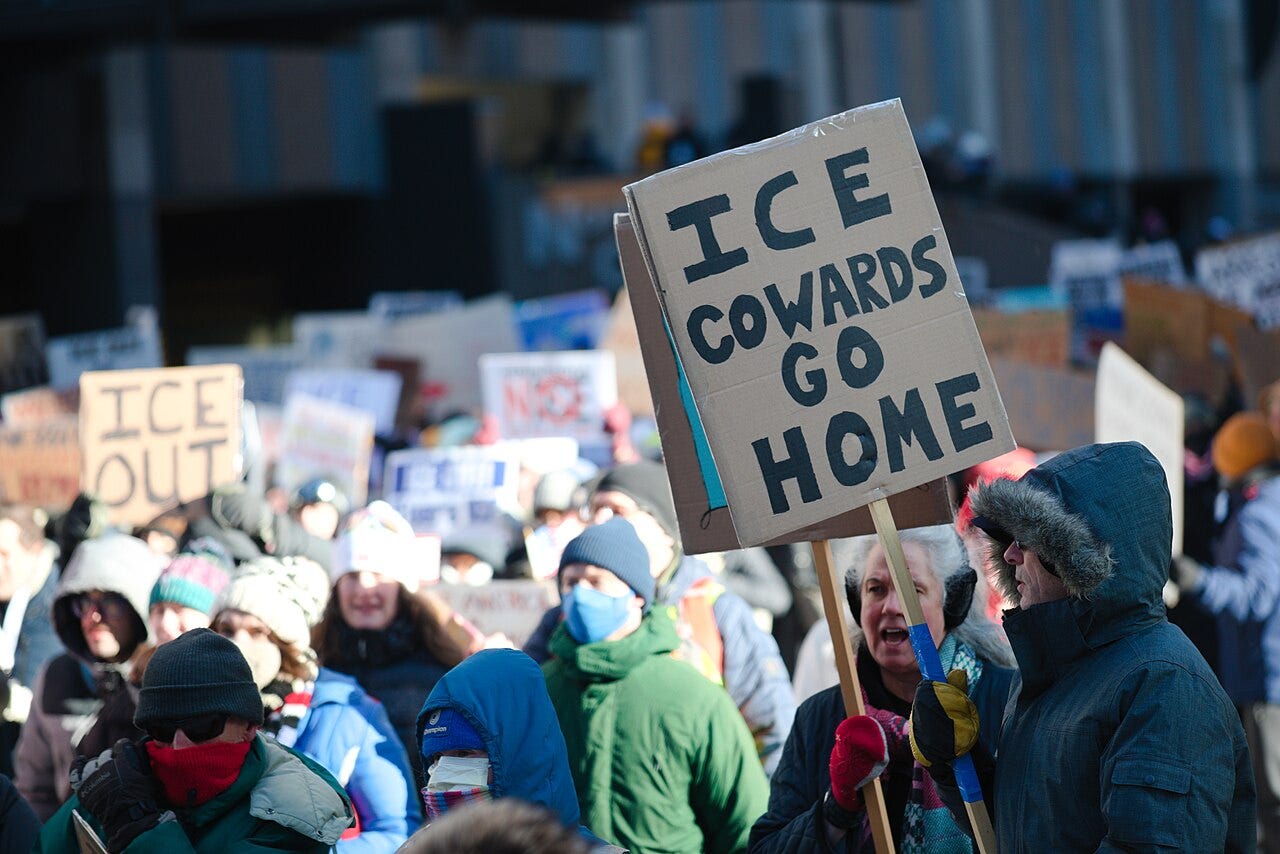
In December 2025, the Trump administration’s Operation Metro Surge deployed thousands of federal immigration agents to Minnesota in what the Department of Homeland Security called its largest operation ever. What followed, according to a 180-page report by advocacy organization Human Rights Watch (HRW), was not an immigration enforcement campaign so much as a human rights catastrophe, one that killed two people, injured dozens more, terrorized an entire metropolitan area, and produced a sustained government assault on the basic liberties of US citizens and legal residents alike.
The scale of the deployment was staggering. The St. Paul ICE field office, which normally covered five states with roughly 190 officers, had 3,000 additional agents added to it. By early February, more than 1,000 Customs and Border Protection officers had also been deployed to the streets of Minneapolis, a city they had no ordinary jurisdiction over.
At the height of the operation, ICE was arresting more than 100 people per day. The total number of immigrants arrested by ICE’s enforcement arm between December 2025 and February 2026 reached approximately 4,000, giving Minnesota the highest per capita arrest rate in the country. Nearly two out of three of those arrested had no prior US criminal record.
The people swept up in those arrests were not, in any coherent sense, the dangerous criminals the administration described. HRW documented case after case of lawful residents, refugees, asylum seekers, and US citizens stopped on the street, at work, on their way to donate blood, and even while shoveling snow. Federal judge Eric Tostrud found that DHS had adopted a policy of stopping residents “based solely on their race or ethnicity.”
A federal judge overseeing refugee cases wrote that “refugees have a legal right to be in the United States, a right to work, a right to live peacefully — and importantly, a right not to be subjected to the terror of being arrested and detained without warrants or cause in their homes or on their way to religious services or to buy groceries.” The government proceeded anyway.
The deaths of Renee Good and Alex Pretti became emblematic of the operation’s violence. Good, a 37-year-old US citizen, was shot three times through her car windows by an ICE officer on Jan. 7 as she appeared to drive away from agents who had surrounded her vehicle. DHS described it as an act of domestic terrorism. HRW’s video analysis concluded it was an unlawful killing: The car was moving away when the shots were fired and posed no imminent threat to the officers. Pretti, also 37 and a US citizen, was killed on Jan. 24 after Border Patrol agents pepper sprayed him, beat him with a metal canister, and shot him ten times while he was observing and filming their activity from the street. Witnesses said they saw no weapon brandished.
A third resident, Julio Cesar Sosa-Celis, was shot in the leg; federal prosecutors later moved to dismiss the assault charges against him after discovering evidence “materially inconsistent” with the case, and ICE’s acting director acknowledged that two officers had lied under oath about the incident.
The operation’s reach extended far beyond those directly detained or injured. A survey conducted by the US Immigration Policy Center found that over 28% of Minneapolis residents had at least one interaction with federal agents, with residents of color 40% more likely to be stopped than white residents. Thousands of students missed school. Immigrants and people of color stopped leaving their homes for weeks. Healthcare appointments were canceled. People carried their passports to buy groceries. Community members organized around-the-clock volunteer stations outside the federal detention facility at the Bishop Henry Whipple Federal Building, meeting people released into subzero temperatures without their IDs or a way home. Federal agents reportedly began directing detainees to find the volunteers in neon vests when they let them go.
The government also moved against those who tried to watch. More than 500 US citizens were detained while observing or protesting the operation. Agents smashed car windows, used pepper spray and flash-bang grenades without warning, and threatened observers with arrest for filming or blowing whistles. Journalists Don Lemon and Georgia Fort were among 39 people charged under federal statutes for being present during a protest inside a church.
Federal judges issued hundreds of orders demanding the release of unlawfully detained individuals; one judge found that the administration had violated 210 court orders across 143 cases, writing that the court was “not aware of another occasion in the history of the United States in which a federal court has had to threaten contempt — again and again and again — to force the United States government to comply with court orders.”
HRW has called for independent investigations into the killings of Good and Pretti, an overhaul of ICE and CBP oversight mechanisms, and a prohibition on immigration enforcement at schools, health care facilities, and houses of worship. Operation Metro Surge has formally ended. Most of those responsible for its abuses have not been held accountable.
Show Us the Receipts
At Inkstick, Tyler Hicks reports on a future of higher costs for Americans due to the US-Israel war on Iran. The article covers those like Montreh Nariman-Hassanbadi, a 32-year-old who has had to forgo medical care as gasoline prices spiked. Jeff Colgan, a professor at Brown University who studies war’s economic effects, started a ticker with his team that tracks the war’s cost to consumers — now north of $60 billion. “When we see hard times, when we see economic times that hit people directly in the pocketbook, people go to food banks because that’s what they can’t afford,” Colgan said. “To me, that’s maybe the saddest component of this.”
The war’s cost hasn’t slowed down military spending, which has ballooned to $1 trillion, according to new commentary from William Hartung. The budget may go up to $1.5 billion if Trump gets his way. While there are some members of Congress pushing back against the increasing war budget, the “slumbering giant” of Congress “is only slowly waking up.” Hartung notes that the US is facing “a moment of war, repression, and disinvestment in basic needs in favor of the profit of the military-industrial complex,” citing continued support for Israeli aggression in Lebanon and domestic issues like widespread abuses in immigration enforcement.
At The World, host Marco Werman spoke with Padraic Kenney, a historian at the University of Kentucky, about Crimean officials’ move to cut off fuel sales to the public. The move is indefinite, and it raises questions about a region that has been at the heart of the Russian war on Ukraine for years.
Join Inkstick, Support Independent Journalism
If you want to support our nonprofit journalism, there are several ways. We accept one-time donations and recurring monthly support year-round. We also make a sum off any of the snazzy Inkstick swag you purchase from our merch store. As always, any support you can offer will go directly toward our reporting. And if financial support isn’t something you can swing, then we’d love it if you shared our articles anywhere you are on social media.
Critical State is written by Inkstick Media in collaboration with The World.
The World is a weekday public radio show and podcast on global issues, news, and insights from PRX and GBH.
Inkstick Media reports on how security decisions shape everyday life, following the money, power, and consequences of war.
Critical State is made possible in part by the Carnegie Corporation of New York.